Blog

  • TRANSITION AND HAPPINESS – in conversation with Jonas Bennaroch, by Olwen Collins

    TRANSITION AND HAPPINESS – in conversation with Jonas Bennaroch, by Olwen Collins

    [vc_row][vc_column][vc_column_text]

    Ahead of the 5th Annual Ramsgate International Film and Television Festival, Spanish filmmaker Jonas Benarroch is in conversation with Olwen Collins to promote his documentary feature Transition and Happiness. The film will preview on the 4th June at 16:00 UTC on the Ramsgate Digital Cinema. 


    OC: For someone who hasn’t seen Transition and Happiness, what is the film about? 

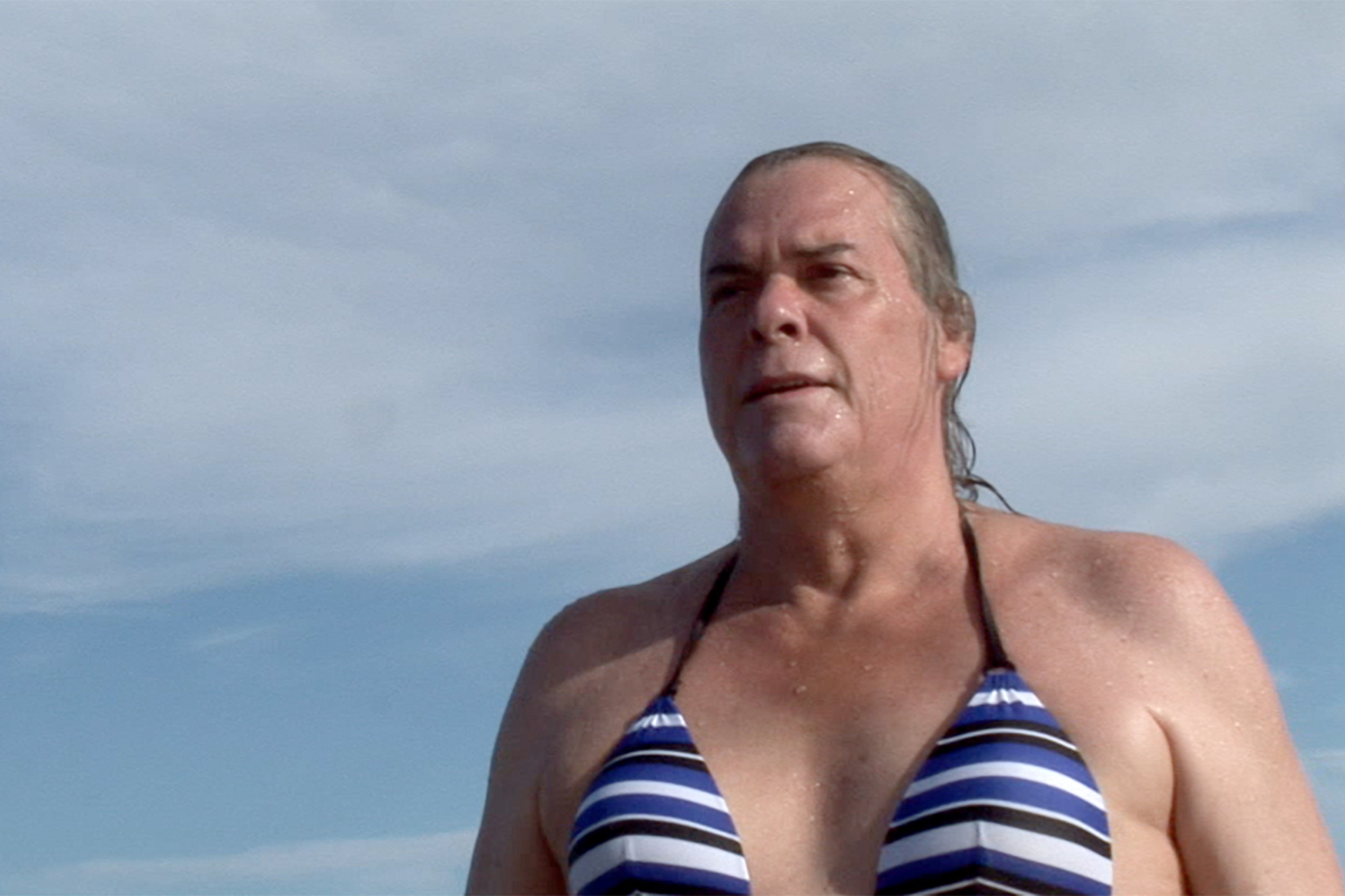
    JB: It´s about an older women who, before coming out, had behaved as a typical macho for many decades. And after coming out, despite having undergone genital reassignment surgery, she makes little effort to appear feminine, which is quite unusual in the female transsexual community, who normally strive to have “passing”, to be invisible as transsexual women. It’s also about her endeavour to be recognised as a full woman in all social and political spheres. 


    OC: You start off the documentary by explaining that you knew Rosa María from school, when she was known as Ramón. How did the pair of you reconnect and what led you to embark on the project?

    JB: It was at a reunion dinner of former students of that school. Rosa María appeared with long hair and painted nails as the only recognisable feminine features; her physical appearance and her voice were strongly masculine and she did not hide them at all; on the contrary, she seemed to delight in this conflict of appearances, claiming that appearances means nothing. That’s what appealed to me the most: she defied any preconceived gender convention.

    By the the time we reconnected, Rosa María was about to go to Thailand to have surgery, which for her was a true rite of passage. At that time I didn’t have much knowledge of gender theory (I had only read Judith Butler’s “Gender Trouble”), and I was also involved in other projects, but in my mind I decided that I wanted to do something with Rosa María, a documentary, yes. However I had to find a way to get into it. I started reading about the subject and, most of all, I started asking myself some questions. Meanwhile I realised that Rosa María’s personality and personal experience were much more powerful and inspiring than Queer theories going around. So I decided to put aside any theoretical work.


    OC: I found the piece refreshingly humorous, from the music and narration at the very beginning to the often crass humour and dirty jokes shared between Rosa and her friend Fina. In many ways, the tone seems quite different from what we’ve come to expect when LGBTQI+ and specifically Trans people are portrayed in the mainstream media. Was this a conscious decision? And how does this enlighten the work? 

    JB: Thanks for highlighting it. It was an absolutely conscious decision, not just while I was searching for the tone and focus of the documentary, but throughout the whole production process. From the preliminary questions I asked myself to the moment of composing the original musical themes (a kind of blue grass by Nick Haughton and Susie Jones), I have strived to achieve something different from what is expected of a gender-themed film. Choosing Rosa María’s life as the centre of the documentary is undoubtedly the first decision in this sense, not only because of her appearance, but because she is not a marginalised person and has an absolutely normal job and family. But I also struggled to find a more personal aesthetic and narrative – personal and “raw” at the same time. Maybe I was led in this direction because there is a saturation of movies about transsexuality. I ran into this problem early on:  producers and distributors refused to participate in my documentary for this reason. I had no choice but to make a film different from what was expected.

    My goal was not to make a film about transsexuality, but to enter the intimate psychological space, and also explore the social space, of a big character who is also a specific case of transsexuality. In short, put personality, not transsexuality, to the fore. Humour necessarily had to be throughout the film, because Rosa María has a very provocative sense of humour and this is one of the things I like the most about her. If she hadn’t had this sense of humour, I’m not sure I would have been so motivated to make this documentary and invest more than two years of my productive life.


    OC: During the filming, you seem to be there every step in the way. For example, when we see Fina in the hospital after her gender reassignment surgery. You capture many special moments. How was the filming process for you?

    JB: When I realised that it would be difficult to find a production company to get involved in my project, for the reasons I explained before, I decided to make the documentary as freely as possible. That means, on the one hand, not being tied to a production schedule and working organically without a script, without a narrative structure, only from the themes and questions that I wanted to investigate and some visual notes and possible scenes that came to mind, and build the film little by little, while editing; and on the other hand, self-produce my film with my own financial resources so as not to have to apply to public funds. Fortunately, I have very generous friends who have helped me when I have needed it. 

    In short, I have tried to create production conditions that have allowed me to follow the process guided mainly by intuition. I also believe that reducing the script and technical equipment to a minimum has allowed my protagonists to relax and have a more confident attitude with me, particularly when it came to talking about intimate things.. For example, I would say: “Rosa, let me go along with you to see Fina at the hospital” or “ Rosa, invite your trans friends and make them a delicious meal” or “Hey Rosa, hey Fina, when are we going to the beach?” . And on the agreed day, I would come with my camera, my digital sound recorder, and a few questions I wanted to ask. The rest was utter improvisation. Of course, this also carries a lot of uncertainty.


    OC: Nearer the culmination of the film, we enter a somewhat more explicitly political narrative at a meeting of Trans * Baix Power, the Sant Feliu association that Rosa and Fina are President and Secretary of respectively. The hugely successful event is attended by the Councilor for Women’s and Equality Policy, Lídia Muñoz as well as a representative of the Generalitat (the system of Catalan autonomous government). It feels as if your film is right at the edge of this changing tide in Spain regarding attitudes towards LGBTQI+ people. What are your hopes for Spain in the future? 

    JB: The explicitly political question is not exactly what it seems; it is like a setting, a social atmosphere. My main interest was to make a psychological portrait. When I started filming, Rosa María and Fina were struggling for their recognition as women, but they were not doing political activism in the strict sense. If institutional political scenes appear in Transition and Happiness, it is because they are materializations of Rosa María´s and Fina’s determination to achieve full social and political recognition after having founded Trans * Baix Power association. It is only because that endeavour makes my protagonists undertake an institutional path that my documentary seems to drift towards a more explicitly political narrative.

    It is true that I was interested in showing the political context of absolute acceptance. Without that, I think Rosa and Fina would not have been able to get that far. But in my film there is no political debate as such, only statements and applause. It is not that I wanted to frame only applause and acceptance, it is that in all the institutional events in which I shot there was a situation of full acceptance; even by right-wing parties, such as PP, which is not in favour of free abortion, at least for women under 18. But all this take place in the municipal political sphere of a small city on the outskirts of Barcelona. I don’t know what it would have been like in a large Spanish municipality. The main debate in Spain, as in many countries, does not come from the right but from feminism, and also from lesbian feminism, which argues that behind the confusion between gender and sex there is an attack on the feminist struggle for the rights of women based on sex.


    OC: Do you have any further plans for distribution of the film? Maybe in an educational context? 

    JB: I’ve already had a “kind” rejection coming from this context, I´m afraid that my protagonists are too “binary” for Transition and Happiness to be easily accepted in an educational context in which the idea of the non-binary is quite hegemonic. For the moment, some municipalities are interested in programming the film. I am a bit lost. Ive not faced serious setbacks from having worked outside the film industry so far. It may be here where intuition collides with reality.


    OC: What’s next for you, Jonas?

    I am already working on another film. It is about a woman who has an incurable disease and faces death with great courage. This documentary will not be funny.

    Director Jonas Bennaroch


    [/vc_column_text][/vc_column][/vc_row]
  • EXTERNAL – in conversation with Leandro and Jonathan Taub by Arzitta Nash

    [vc_row][vc_column][vc_column_text]

    AN. Please tell us about the film in your own words.

    AN. Tell us about the style of the film; the use of subtitles, symbolism, voice-over and the main protagonist and the inspiration behind this style and tone.

    AN. What was the filming process like?

    AN. Tell us about the filming location, and why you decided to use it.

    AN. Leandro plays the protagonist, Joseph, and is also a co-director on the project. What can you tell us about this experience of working behind and in front of the camera and your professional relationship with Jonathan?

    AN. Tell us about your up-coming projects, what’s next for you both?


    [/vc_column_text][/vc_column][/vc_row]
  • STAND STRONG – in conversation with Director Hisashi Kikuchi and Producer Shin Okada, by Oliver Carey

    [vc_row][vc_column][vc_column_text]S.L. What is the film about?

    Shin (P):  It’s a story about young skaters.
    Hisashi (D):  Yes, a great adventure of the real skaters in Tokyo

    O.C. What was the inspiration behind the film?

    Shin (P):   It’s the episodic stories I used to write in my blog.
    Hisashi (D):  SHIN OKADA!! No doubt.

    O.C. How was the filming process?

    Shin (P):  I had absolutely no clue at first but the whole process was nothing but stimulating and valuable experience for me.
    Hisashi (D):  Super challenging but super fun. I think we all stood strong after all..Haha.

    O.C. Your main cast, Rei Daisaku Hidaka, Takashi Matsumoto, Ryo Sagawa and Kaito Nakata, work extremely well together. Was it difficult to find actors that worked together so naturally, who could also skate?

    Shin (P):  I knew them all in person originally as I tried to reach out to particularly popular young skaters from my community in Japan. The balance and the chemistry among the four characters were crucial. The reality of the young skaters here now is that you see Chinese, African American and mixed kids. So we took more careful attention to achieving the casting as real as possible. Those four are not actors so didn’t know how to perform on camera but I think we could cast the very ones that stood out its individual characters as skaters.
    Hisashi (D):  The most challenging casting was the delivery guy, wasn’t it?
    Shin (P):  It was you. Haha
    Hisashi (D):  The balance between the cast was all Shin’s doing. I truly feel that those four kids of Crasher was the best find.

    O.C. Did the actors you cast affect the way you thought about the characters in Stand Strong?

    Shin (P):  Both in a good way and not so good way, I think. Like coming to set way passed the call time, haha. They are skaters and rather free-spirited. One moment they are doing things as directed and the next they perform much better than anyone had expected. I imagine the director would have more challenging time trying to get the shots he wanted while navigating such fluid circumstances.
    Hisashi (D):  Yes, because they were not actors I gave them a keyword of each shot instead of locked dialogues so they could form their own words outputting from them naturally. I conducted this method the entire shoot.

    O.C. The skate tricks and stunts in the film are very impressive. Did the cast do the tricks and stunts themselves?

    Shin (P):  The cast did it themselves. All the skaters you see in the film are real skater, and except for the Crasher members, they are all real skaters by their own names. As they are all remarkable, we didn’t want to bring stuntmen to keep it real which I think ultimately brought an authentic tone for the picture.
    Hisashi (D):  He is absolutely right they were all outstanding.  Depending on the conditions of the skaters on the shoot days, they made many attempts and fell over countlessly. For me, those behind the scenes were in fact the most inspirational.

    O.C. The end of the film teases an exciting future for team Crasher. Have you considered making a sequel to Stand Strong to explore the story further?

    Shin (P):  Middle-aged Crasher…lol!  Abandoned by their sponsors, or Chen the crappy skater becomes the most successful businessman…showing what happens after they went through various changes and stepped out of their staking life. We are seeking financiers for this sequel feature!
    Hisashi (D): I think it’s more interesting that the audience would imagine how exciting the Crasher’s future is going to look. Still, I personally would like to see how it turns out in 30 years.

    O.C. You have directed music videos, adverts and TV, but Stand Strong is your first feature film. Was it a challenge to jump from making shorter projects, to making a film?

    Hisashi (D):  It is a feature length film, but this time I tried to construct it by weaving a series of short chapters so in a sense it has become something like a compilation of those music videos or adverts work I have ever done.

    O.C. What attracted you to making this project?

    Shin (P):  One day I reunited with Hisashi who I used to skate together. One of us became a pro skater, and the other became a filmmaker. We started to talk how fun it would be to create something together, and naturally the skateboarding, where we came from as a subject came to our mind.
    Hisashi (D):  What he said! Reuniting with Shin truly made an impact for me. Also, the reason I pursued my filmmaking career has at least to do with that I used to skate as young.

    O.C. What are you working on now?

    Shin (P): Crasher in 30 years! Please support us! Haha. The title is to be Still Stand Strong!!!
    Hisashi (D):  I hope to keep creating various contents – both fiction and documentary. Currently developing this new documentary project! I am very excited!

    Hisashi Kikuchi

    [/vc_column_text][/vc_column][/vc_row]

  • DOGWOOD – in conversation with Steve Sale, by Livia Hartmann

    [vc_row][vc_column][vc_column_text]

    We talked with the director Steve Sale about his selected first feature film Dogwood. With a stunning cinematography we wanted to discover more about the process of his most recent creation.


    L.H. What is the essence of your film?

    S.S. For me it is about escape. To live a more simpler existence.

    I wanted the story to unfold naturally and was guided by what could be achieved without a budget and crew. There were many feelings about modern society, brexit, environmental issues, mental health, life and death that I wanted to portray in the film but ultimately didn’t know where it was going to end up. This of course was before Covid. The story continued to be shaped in editing. It is essentially a fictional documentary and for me it was a way of dealing with events in my life and the world at the time.

    I’m lucky to have the most beautiful woodland on my doorstep, that was probably the biggest inspiration to begin with. I was inspired too by some anti fracking protests that were living in the woods near to me.


    L.H. What elements do you believe we’re crucial to the development of the story?

    S.S. When we started filming we worked with just a line ‘a man goes to live in the woods’, not with a script. This gave us a lot of freedom and we were able to develop the story organically whilst shooting.

    I have a friend who is a talented poet and author, Alex Caird, and adding his beautiful poetry added another dimension to Martin.

    I knew I wanted to add a voice over to the film, but as a sort of narrator, which I thought would be unusual and give the film a certain tone. I came across John Hill who has an amazing speaking voice, and he’s such a nice guy. I built a little voice over booth in his living room using a duvet and he recorded it there.


    L.H. How was the filming process? What are the learnings and challenges you discovered?

    S.S. Making no budget films has challenges on its own but I am quite used to shooting things solo.

    Sometimes working with more than one actor on screen was a challenge as I was running around rolling two cameras, doing lighting and sound as well as concentrating on the performance, that was tricky.

    It is very hard to find good actors and Joe (Martin) is very rare in that respect where he is a good actor and committed. Sometimes these two things rarely meet when looking for actors for a low budget film.

    I do have a story about a badger but maybe that’s for another time.


    L.H. What was your reaction when you saw your movie finished?

    S.S. As I edited the film, I saw it many times, but I couldn’t really say my reaction was anything but relief when I finally finished it.


    L.H. What kind of impact would you like to have on your audience?

    S.S. I think the film can actually be portrayed in a few ways just like a song can be. I hope they like it, it’s not a film you should take your Nan to see, in fact I’ve banned my Mum from watching it.

    At the time of making it I felt we had lost touch with nature but I think we have rediscovered it in lockdown.


    L.H. In 5 years what would like to be your reaction when revisiting your movie?

    S.S. I think in 5 years time I will either think it’s terrible or will be impressed with its freedom.

    Steve Sale

    [/vc_column_text][/vc_column][/vc_row]

  • Phil Liggett: the Voice of Cycling, International Premiere, exclusively at the Ramsgate International Film & TV Festival with a live Q&A with Phil Liggett himself

    [vc_row][vc_column][vc_column_text width=”s.bolioli@ramsgateiffest.org” font_family=”Verdana, Geneva, sans-serif”]

    The Ramsgate International Film & TV Festival presents the International Premiere in association with ProCyclingOutlet of Phil Liggett: the Voice Of Cycling, directed by Nickolas Bird and Eleanor Sharpe, the team behind the acclaimed documentary Mamil. In competition for the Anchor Awards, Phil Liggett: the Voice of Cycling tells the life of legendary television commentator Phil Liggett MBE, inextricably entwined with the history of professional cycling. During a career that has spanned five decades, 15 Olympic games and 47 Tours de France, Phil Liggett has been there for every key moment in cycling over the last half century. The heroic triumphs, the appalling tragedies, the scandals and the controversies; Phil has seen it all, and told us about it with passion, knowledge and his trademark wit. As much as anyone, Phil Liggett has shaped the way the world sees cycling.

    The screening, which will take place on Saturday June 5, at 18.15 on Ramsgate Digital Cinema will be followed by a Q&A with the Directors and Phil Liggett himself. Tickets are FREE but must be pre-booked on Ramsgate Digital from June 1st (donation welcome).


    Based in Girona, a hotspot for professional cyclists and enthusiasts from around the world, Pro Cycling Outlet offers an unparalleled collection of new and pro-owned cycling equipment for our clients worldwide. In Pro cycling Outlet you have the special opportunity to access a normally hidden world that we, in Girona, are lucky enough to be part of.
    Whether you are looking for the best value/quality ratio or you just want to get amazing pieces of cycling memorabilia, Pro Cycling Outlet is your go-to place.


    [/vc_column_text][/vc_column][/vc_row]
  • Sub-Saharan Africa: an open window

    [vc_row][vc_column][vc_column_text width=”s.bolioli@ramsgateiffest.org”]

    The curated programme Sub-Saharan Africa: an open window presented in partnership with TidPix, will give digital festival goers the chance to discover up-and-coming talents and pioneers from South Africa, Sénégal, Ghana, Zimbabwe, Uganda, Kenya and Nigeria including co-productions from Germany and Austria. The programme will be completed by a discussion between talents and professionals of the industry facilitated by the curator on the new film streaming distribution models and the opportunities and new challenges for African cinema.

    One of the films from the African strand, Poppie Nongena comes from Ramsgate International Film & TV Festival alumni, Christiaan Olwagen, who screened The Seagull in 2018. The multi-award winner of the South African Film & TV Awards, the Golden Horn, Poppi Nongena tells the story of a South African woman, an Afrikaans speaking Xhosa mother, whose life revolves around her family and finding stability in a period of insufferable upheaval in the country.

    [/vc_column_text][/vc_column][/vc_row]

  • UK Premiere of ADVERSE with Mickey Rourke opens 5th Ramsgate International Film and Television Festival

    [vc_row][vc_column][vc_column_text width=”s.bolioli@ramsgateiffest.org”]Once again, the Ramsgate International Film and Television Festival will take place online on its own custom designed platform Ramsgate Digital Cinema. “The success of our 2020 virtual edition proved that despite adversity, when there’s a will there’s a way. 2021 is even more significant as it is a testimony of how artists worldwide have overcome challenges to produce astounding and diverse work”. Sylvie Bolioli, Founder Director of the Festival

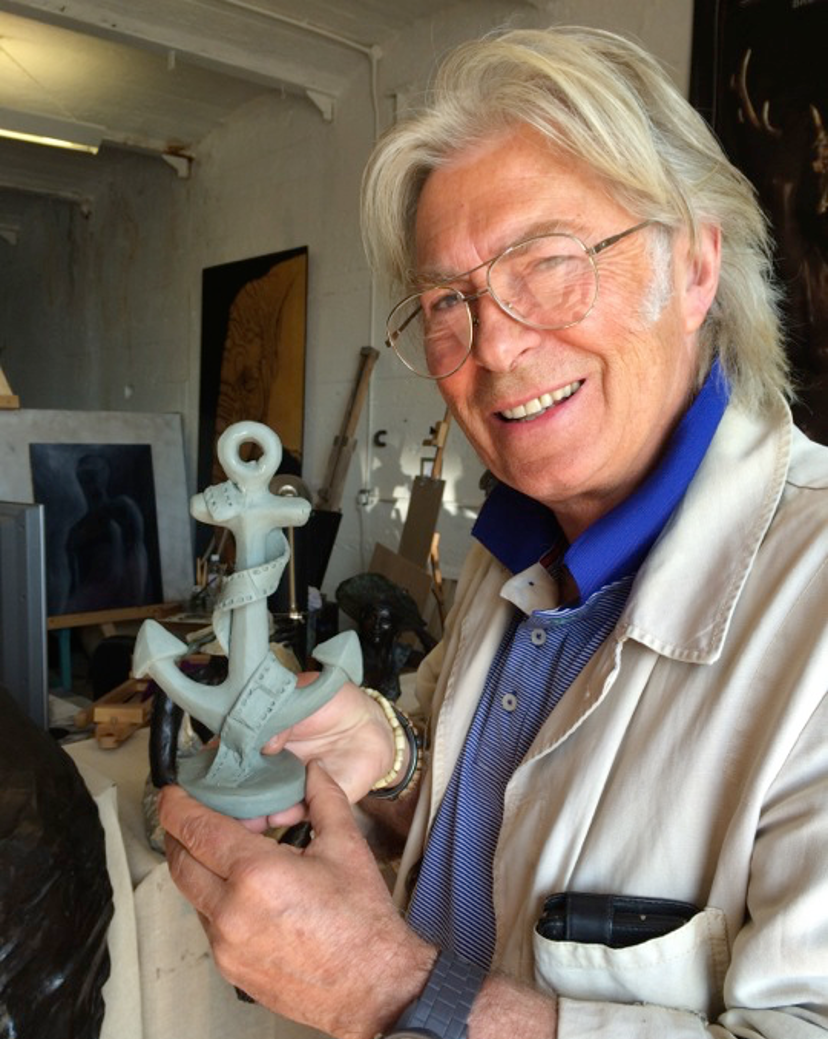
    This year is also special as the festival is dedicated to Dominic Grant, the amazing artist who sculpted our coveted Anchor Bronze statuette. Dominic who was also the lead singer from the 1970’s band ‘Guys & Dolls’ alongside his wife Julie Forsyth, Bruce Forsyth’s daughter. Sadly, Dominic passed suddenly last November, and the Festival would like to remember him by showing a video about the making of the statuette, which will bear his name at the Opening Night. All donations received from bookings for that night will be given to the George IV statue project. Dominic had a dream, that of installing his magnificent Statue of George IV at Ramsgate Harbour, the only ‘Royal’ Harbour in the whole of Great Britain. Dominic spent almost two years sculpting and he did this as a gift to Ramsgate. The life-size model still needs to be cast in bronze and his family have set up a “JustGiving” page to which the Festival also wants to contribute.

    https://www.justgiving.com/crowdfunding/georgeiv?utm_term=rqYdzJEM6&fbclid=IwAR0YSzU0lWfpMfctW0aDfVvcH8RjocO13LgzVD8d1SL32pDy3yRdl-d43Bs

    The ceremony will be followed by the UK premiere of Brian Metcalf’s Adverse, the opening film and first to compete for the Anchor statuette now renamed Dominic’s Anchor. The film features Mickey Rourke, Thomas Ian Nicholas (American Pie) and Sean Astin (Lord of the Rings), to name but a few. Unfortunately, Brian and the cast had to cancel their trip to the UK for our opening night due to the Covid19 pandemic. “It is such a shame but there are still too many uncertainties and restrictions, but we look forward to their involvement in this year’s festival.”  says Bolioli.

    [/vc_column_text][/vc_column][/vc_row]

  • A Conversation With… Andrew Young, Head Programmer of the Fight Back Awards

    A Conversation With… Andrew Young, Head Programmer of the Fight Back Awards

    [vc_row][vc_column][vc_column_text]

    2021 brings an innovative new partnership to the Ramsgate International Film & TV Festival: the Fight Back Awards. 

    We spoke to Andrew Young, Head Programmer of the Fight Back Awards to learn more about this brand new project.

    What is the aim of the Fight Back Awards?

    The Fight Back Awards were created by Sylvie Bolioli, the director of the Ramsgate International Film & TV Festival. It was her mission to create a special satellite event as part of our festival that showcased and honoured the work of veterans in film. Fight Back was inspired by the use of acting in veteran recovery, and art therapy in general. The aim, therefore, is to give more space for veteran-made films and scripts to be seen and heard. We want to offer the opportunity; not just for public screening of veteran-made films, but hopefully to offer advice and training to veterans who see the film industry as a part of their future. 

    How do these awards work?

    The actual awards at Fight Back are split into multiple categories: commending scripts, films and performances. These are supported by a Special Contribution award. Films are eligible to be screened as part of Fight Back, and to win an award, if a veteran has been involved somewhere in the production of the film. It does not have to be the lead actor or director, it could be anybody working on the film. The films don’t have to be about the military or veteran experience, either. The awards are not for ‘war films’ but any films made by veterans. We encourage any veteran involved in film to get in touch and submit their work.

    What made you want to get involved with the Fight Back Awards?

    The Fight Back Awards have given me the chance to become more involved in film programming and do something worthwhile and beneficial to the film industry and wider society. The purely selfish answer is that it was a great opportunity! This is my first-time head programming a festival selection and it’s a great privilege for me. It is also more important than me, however, and the chance to screen a film and give an award that might help launch the career of a veteran is something I can hopefully look back on and be proud of later in my life.

    Do you think veterans are underrepresented in film?

    Without having any numbers to hand, I would say that veterans probably are underrepresented in film, yes. It is well-known that breaking into a great number of careers is difficult for veterans because the right networks are not always in place to support them. The film industry is sadly dominated by personal connections and this could be to the detriment of some really talented, unheard people, including veterans.

    I believe that stories authentically told by and about people struggling with their mental and physical health are underrepresented in the industry. Big Hollywood productions can often take a very simplistic or demonising approach to mental health, and disabled actors are given very few opportunities in film. Hopefully giving more opportunities to veterans to exercise their creativity and tell their own stories will give people a more empathetic and clearer understanding of what they experience.

    Meet Andrew Young

    Have you enjoyed your role as head of programming?

    The role has been great so far, mostly in getting to speak to fascinating people about these pressing concerns. The Fight Back team have had some really interesting and productive meetings with other individuals and organisations involved in arts rehabilitation and veteran networks, and that has been both very enjoyable and engaging for me.

    A lot of fun is hopefully still to come. Watching the bulk of the submissions lies ahead of me and I’m excited to find and champion the most impressive work from veterans in film!

    What are you most looking forward to about this year’s festival?

    I am most looking forward to the wonderful speakers and panellists we will be welcoming to the festival, even if that is held virtually! I can’t confirm anything yet, but I hope that we will have some guests at the Fight Back Awards who will have fascinating and invigorating things to say.

    A huge thank you to Andrew for taking his time to talk to us. We look forward to bringing you more content on the Fight Back Award and Ramsgate International Film & TV Festival. 

    Ciara Grimes & Adam Grewer


    [/vc_column_text][/vc_column][/vc_row]
  • Dominic Grant, the sculptor of the Anchor Award, to be honoured at RIFTVFest 2021

    [vc_row][vc_column][vc_column_text]

    We were shocked by the sudden passing on November 18th, 2020 , of Dominic Grant, the man with amazing talents who sculpted our fabulous Anchor Award. Dominic’s fame and success were international. He exhibited his work in Amsterdam, Marbella, Mayfair, Monte Carlo and Portofino. Amongst his best known works, a bust of the father of his wife Julie, the legendary Bruce Forsyth was commissioned by the London Palladium to mark the sixty years in show business of Sir Bruce. Dominic also made a bronze of Barbara Streisand commissioned by Sony. His latest piece is a larger than life size sculpture of King George IV, which he donated to the town of Ramsgate to celebrate the 200th Anniversary of the making of Ramsgate by the King, as the only Royal Harbour in the entire United Kingdom.

    Dominic was an accomplished singer with a deep and suave voice, having started with the pop group Guys & Dolls in the 1970s, alongside his wife Julie Forsyth, with whom he pursued his singing career as Grant & Forsyth. Dominic was a member of the Jury of the Ramsgate International Film & TV Festival in 2019, judging music videos.

    The Festival is therefore changing the name of Bronze Anchor for the Best Film to Dominic Grant Award for the winner of the main competition. RIFTVFest 2021 will be dedicated to Dominic, with a short documentary about the making of the statuette.


    [/vc_column_text][/vc_column][/vc_row]
  • Ramsgate IFTVFest 2020 switches to online live-streaming amid global Corona crisis

    Ramsgate IFTVFest 2020 switches to online live-streaming amid global Corona crisis


    The best in independent cinema to audiences’ homes as movie theatres remain closed or struggle to draw crowds in most parts of the world 

    The tragedies of the Coronavirus pandemic have led to public events being cancelled or postponed worldwide. But the 4th edition of one innovative film festival from the UK, the Ramsgate International Film & TV Festival will still be taking place by moving to its own online virtual platform, Ramsgate Digital Cinema. 
    Festival director Sylvie Bolioli said:“Our thoughts are with people still in intensive care or slowly recovering and all victims of this terrible disease, as well as their families. Our thoughts are also with all the workers who helped to keep their countries going, in the UK and elsewhere, and particularly those on the frontline who risked their lives to save others.”
    “But we also wanted to support the independent film industry and give exposure to a plethora of excellent work from the four corners of the planet and keep cinema alive.”
    The line-up and schedule of shortlisted films, documentaries, music videos and web pilots is available on the website www.ramsgatedigitalcinema.co.uk.The competition will kick in with the World Premiere of a remarkable documentary featuring Sam Waterston, ‘Gatsby in Connecticut: the Untold Story’, directed by Robert  Steven Williams. Nick Broomfield fronts the Jury in the Feature Documentaries section.  The festival’s BAFTA-winning Patron, Brenda Blethyn (currently starring in Kate & Koji, Wednesdays at 8pm on ITV, UK) chooses the appropriately named Brenda Blethyn Special Prize for the Best Film by a First Time Director. Other Jury members comprise Dee Anderson, Jimmy Akingbola, Kenny Doughty, Jerome Blake, Luba Balagova, Lisa Scott Gordon, John Warburton, Mark Valley, Peter Ferris, Bruno Tilley, Julie Forsyth and Tim Clark.As usual, screenings at the festival will compete for the coveted Anchor awards – Ramsgate being a town with a strong maritime association – and online viewers will be able to have their say on the films they watch, with eight audience awards being up for grabs.
    “The festival has received many hundreds of submissions from all around the world; and although the present circumstances are particular, we are pleased to be able to bring those that are shortlisted to audiences in a slightly different way.”
    Using the latest technology, films will be live streaming and will only be accessible once in order to protect the works. So registration at www.ramsgatedigitalcinema.co.uk is essential. The entire event is free in order to support people financially affected by the corona crisis and give them the opportunity to access quality entertainment. Optional donations will help the Festival carry out its work and ensure its survival.
    Webinars by high end industry players will complete the programme. Andy Mayson (Altitude Entertainment) will look at the future of distribution of independent films post-COVID-19. Rebekah Louise Smith will advise filmmakers on the impact of the coronavirus on festival strategy and how to fix it.
    This year, we are also launching a new satellite event, the ‘Fight Back International Awards’, in partnership with the organisation ‘Ring of Peace’ with a special competition for ex-servicemen suffering with PTSD and using filmmaking as a way to ‘fight back’ and re-integrate into society. We will have a digital introduction during the festival, with a special screening of a film written and performed by ex-servicemen with PTSD and a webinar hosted by Peter Ferris, who runs ‘Ring of Peace’ and teaches acting/filmmaking to this less-looked out for category of people suffering from mental illness. The purpose of the ‘Fight Back’ Awards, distributed from next year, will be to raise awareness of PTSD and encourage sufferers to find an outlet through cinema. Donations for this section will go to the Charity ‘Combat Stress’.